
How Much Does Forestry Mulching Cost Per Acre in Texas?
Published cost guides put most forestry mulching at about $400 to $2,000 an acre. A pricing guide for the clearing trade runs higher, at $3,000 to $6,000 an acre for heavy growth. By the hour, national guides list $125 to $300 with an operator.
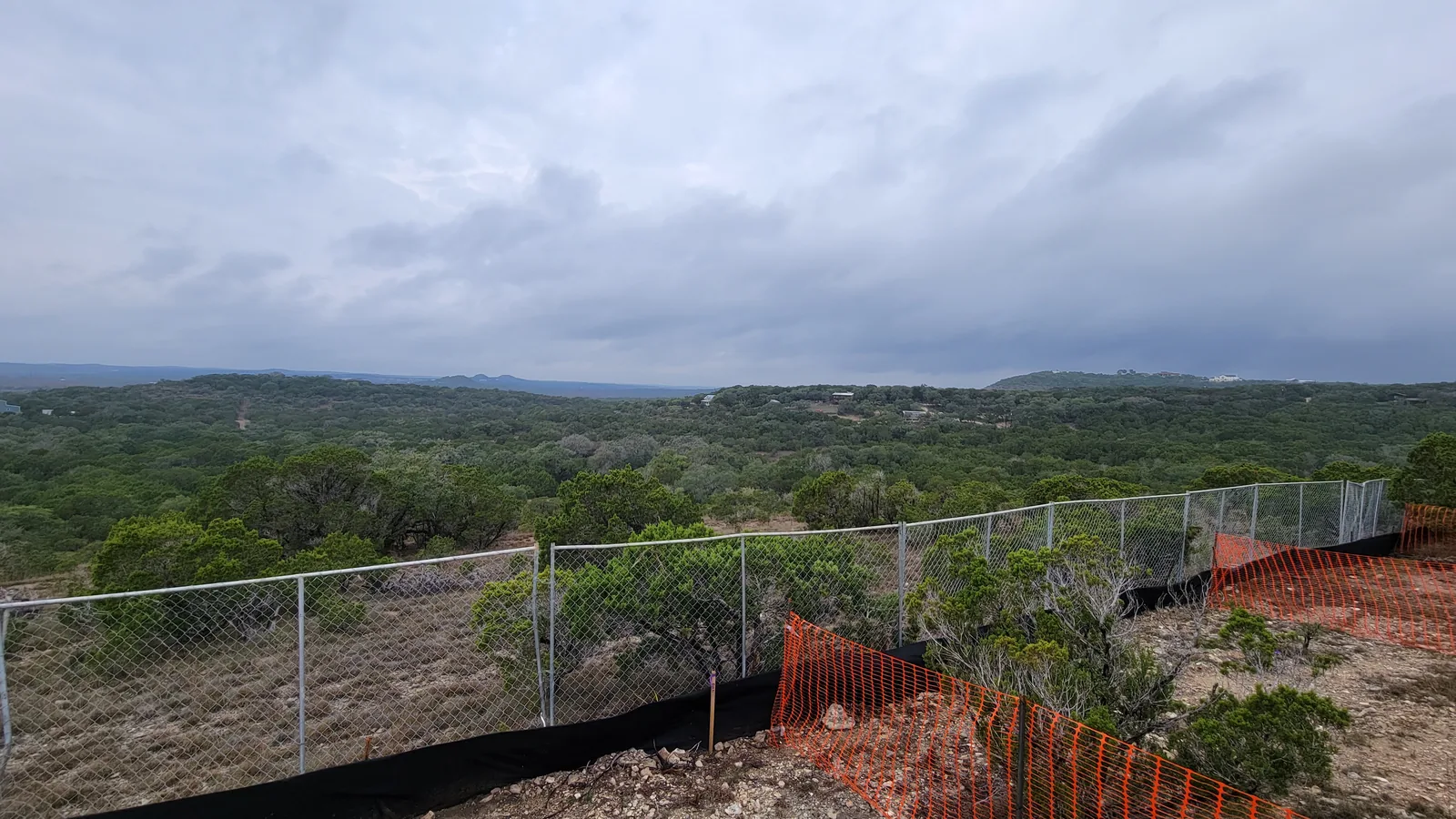
Those are market numbers from published sources, not our price list. On a Hill Country lot, the forestry mulching price moves with cedar (Ashe juniper) density and rock. Slope and the trees you keep move it too. A thick cedar brake on ledge rock costs more per acre than scattered brush on flat ground.
What do published guides say forestry mulching costs?
National cost guides agree on the hourly rate. They split on the per-acre rate, because every job differs.
| What is priced | Published range | Kind of source |
|---|---|---|
| Light brush and grass, per acre | $400 to $850 | National cost guide |
| Moderate brush and small trees, per acre | $800 to $1,200 | National cost guide |
| Dense brush with hardwoods, per acre | $1,200 to $2,000 or more | National cost guide |
| Heavy growth, per acre | $3,000 to $6,000 | Clearing-trade pricing guide |
| Mulcher with an operator, per hour | $125 to $300 | Two national cost guides |
| Mulcher with an operator, per day | $1,000 to $2,500 | National cost guide |
| Minimum fee per job | $400 to $600 | National cost guide |
| Texas grant cap for mulcher work | Up to $2,000 an acre | Texas A and M Forest Service |
The Texas line comes from a Texas A and M Forest Service grant for wildfire fuel work near buildings. It pays back actual costs up to $2,000 an acre for forestry mulcher work. The agency says the grant may not cover the whole project.
Small or odd-shaped jobs often go by the hour, a national guide notes. A minimum fee also lifts the per-acre price on a small lot. Ten acres spread the cost of the trip far thinner than a quarter acre.
What moves the price per acre in the Hill Country?
- Cedar density. A thick cedar brake takes more machine time than scattered trees. The state forest service notes dense brush may need a high first pass, then a lower second pass.
- Trunk size. The same agency says a mulching head handles standing trees 6 to 8 inches across. Some operators take bigger trees. The trade guide notes some companies charge $25 to $100 per tree over 8 inches.
- Rock and slope. Large rocks or steep slopes may not suit machine mulching, the state forest service says. The trade guide adds 20 to 40 percent for rocky ground.
- The trees you keep. Mulching around many trees adds difficulty and cost, a national guide notes. The state forest service advises flagging each tree you want kept before work starts.
- Acres and the trip. Hauling a big machine to the site costs the same for one acre or twenty. Some companies charge a $150 to $300 setup fee, a national guide notes.
- The finish. A finer mulch means more passes over the same ground. More passes put more hours on the bill.
Machine size changes the pace. A national guide puts a skid steer mulcher at 1 to 3 acres a day. It puts a large tractor mulcher at up to 15.
We run a 400 horsepower wheeled mulcher on open acreage. A skid steer mulcher takes the fence lines and tight spots.
How does mulching compare with dozing and cut-and-haul?
| Method | Published cost marker | What it leaves |
|---|---|---|
| Forestry mulching | $400 to $2,000 an acre for most jobs (national guides) | A mulch layer and low stumps |
| Dozing | About $144 an hour for a smaller dozer, $176 for a bigger one (Texas extension survey) | Roots out and piles to burn or haul |
| Cut-and-haul | Adds $500 to $2,000 or more an acre for hauling and disposal (trade guide) | Bare ground, with the wood trucked off |
A dozer pushes trees over and pulls the roots out. The Texas A and M AgriLife Extension Service tracks dozer rates in its 2026 custom rates survey. Statewide, dozer land clearing averaged about $144 an hour under 160 horsepower and $176 above it. Both rates include fuel and a person to run the dozer.
Dozing has a cost the hourly rate leaves out. Texas Parks and Wildlife warns that pushing cedar on the Hill Country’s shallow, rocky soils brings rock to the surface. The soil left behind can wash away.
A dozer also leaves piles to burn or haul. In a drought, the county commissioners court can ban outdoor burning in the unincorporated county. Hauling adds trucks and disposal fees. The trade guide puts that at $500 to $2,000 or more an acre.
Mulching skips that step. The state forest service notes that mulch made on site adds no cost beyond labor and the machine. Some owners still want cedar cut and pushed into a pile to burn. Our cedar clearing work handles that when a burn pile is the plan.
What does forestry mulching leave behind?
Mulching leaves a layer of wood chips where the brush stood. The trade guide puts that layer at 2 to 4 inches. The state forest service says the mulch cuts erosion and helps the soil hold moisture.
Most mulchers grind stumps down to the ground or a few inches below it. The roots stay in the soil and help hold it in place. That helps on thin Hill Country soil, but it gets in the way if you plan to dig.
Plan for cedar to come back from seed. Texas Parks and Wildlife says Ashe juniper dies when the tree is cut. That is the cedar of the eastern and central Hill Country. The seed stays in the soil, so the agency expects another treatment in 7 to 8 years.
When is forestry mulching the wrong tool?
- Big hardwoods. Trees over about 8 inches often get felled first, the trade guide notes. A large hardwood you want gone may call for a tree service.
- Stumps and roots that must come out. A mulcher leaves the roots in the ground. A dozer or an excavator pulls them, at $1,200 to $2,500 a day with an operator in one national guide.
- House pads. The International Residential Code speaks to slab sites in section R506.2. It says the area inside a slab’s foundation walls must have all vegetation and topsoil removed. So a pad site gets stripped past the mulch and roots. That is site work for house pads, built to the spec your builder or engineer sets.
- Heavy rock. Rock can break the teeth on a mulching head, the trade guide notes. Where loose rock covers the ground, a rock mill can grind it into base.
How do you get a real number for your land?
A per-acre range is a starting point. The real number comes from your ground, mostly the cedar and the rock. We are based in Kyle and work across the Hill Country and the I-35 corridor.
We look at the land, then put the quote in writing. Call or text (737) 317-7625 for a free estimate. See how our forestry mulching works. For the whole property, start with land clearing in Kyle and the Hill Country.